
Introduction to Mahima Dharma
Mahima Dharma is a significant religious movement that originated in Odisha in the 19th century. It was founded by Mahima Gosain, who propagated its philosophy and principles during his lifetime. although he did not leave behind any written works. After his demise, the responsibility of spreading the religion fell to his disciples. The movement initially spread among the lower classes and illiterate sections of society in the princely regions.
Bhima Bhoi: The Poet and Propagator
Bhima Bhoi was the second disciple initiated by Mahima Gosain and played a crucial role in making Mahima Dharma a popular religion.
- Literary Contribution: After his initiation, he devoted his talent to the movement, composing numerous hymns, bhajans, chautishas, and poems to spread the faith.
- The Scribes: Since Bhima Bhoi was illiterate or unable to write, Mahima Gosain appointed four scribes—Vasudev Panda, Hari Panda, Dharmananda, and Markand—to transcribe his works. They remained his devoted associates until the end of his life.
Early Life and Origins
Much of Bhima Bhoi’s life, including his birth parents and exact birth date, remains shrouded in mystery and folklore.
- Birthplace: While there was early confusion (some claiming Dhenkanal), modern researchers generally agree he was born in the village of Jatashinga in Redhakhol (now in Sonepur district).
- Childhood: Legend states he was abandoned as a newborn in a pond and adopted by a childless couple, Danara and Gurubari. Following his adoptive father’s death, his mother remarried Dhaneshwar Bhoi.
- Hardship: Bhima felt unwanted in his step-family and lived a life of poverty, working in fields, herding cattle, and begging. He describes his suffering vividly in his work Stuti Chintamani.
The Debate on Blindness
There is a longstanding popular belief that Bhima Bhoi was blind, but evidence suggests otherwise.
- The Myth: Many believe he was blind from birth or lost his sight in childhood.
- The Evidence: In his own writings, Bhima Bhoi describes visual elements like colors (black, white, pink), nature, and physical beauty, implying he could see.
- Conclusion: He never explicitly claimed to be physically blind in his texts. References to being “blind” or “sinful” were likely metaphorical expressions of humility, common among poets of that era.
Initiation into Mahima Dharma
Bhima Bhoi’s life changed in 1862 when he met Mahima Gosain.
- The Meeting: Mahima Gosain, accompanied by his first disciple Govinda Baba, met Bhima at Kankanpada village in the month of Kartik.
- Transformation: Bhima described this as a moment of enlightenment where the “eyes of knowledge” were opened. Following this, he was instructed to preach the religion.
The Khaliapali Ashram and Householder Life
Unlike many ascetics, Bhima Bhoi lived as a householder.
- The Ashram: He established an ashram in Khaliapali near Sonepur.
- Family: He married multiple wives (including Annapurna, Rohini, and Sumedha) and had children (a son, Kapileshwar, and a daughter, Lavanyabati).
- Worship: He introduced rituals that differed from orthodox Mahima practices. For instance, he and his wife Annapurna were worshipped by devotees on a high altar during the Magha festival.
Conflicts and Controversies
Bhima Bhoi faced opposition from both conservative Hindu society and orthodox Mahima monks.
- Conflict with Hinduism: His teachings rejected caste discrimination, idol worship, and Brahminical rituals, leading to criticism and social ostracization.
- Internal Conflict: The Mahima Sannyasis of Joranda (the main seat of the faith) disapproved of Bhima Bhoi because he lived as a householder and allowed women in his ashram. Consequently, he is not counted among the four “Siddha Gurus” of the faith by the Joranda group.
- Temple Attack: There is a false allegation connecting him to an attack on the Jagannath Temple in 1881. Historical records clarify that Bhima Bhoi was not involved in this incident.
Death and Legacy
- Death: Bhima Bhoi passed away on Shivaratri in 1895 at his Khaliapali ashram.
- Succession: His ashram was subsequently managed by his first wife Annapurna, and later by his daughter Lavanyabati, who lived as a sannyasin.
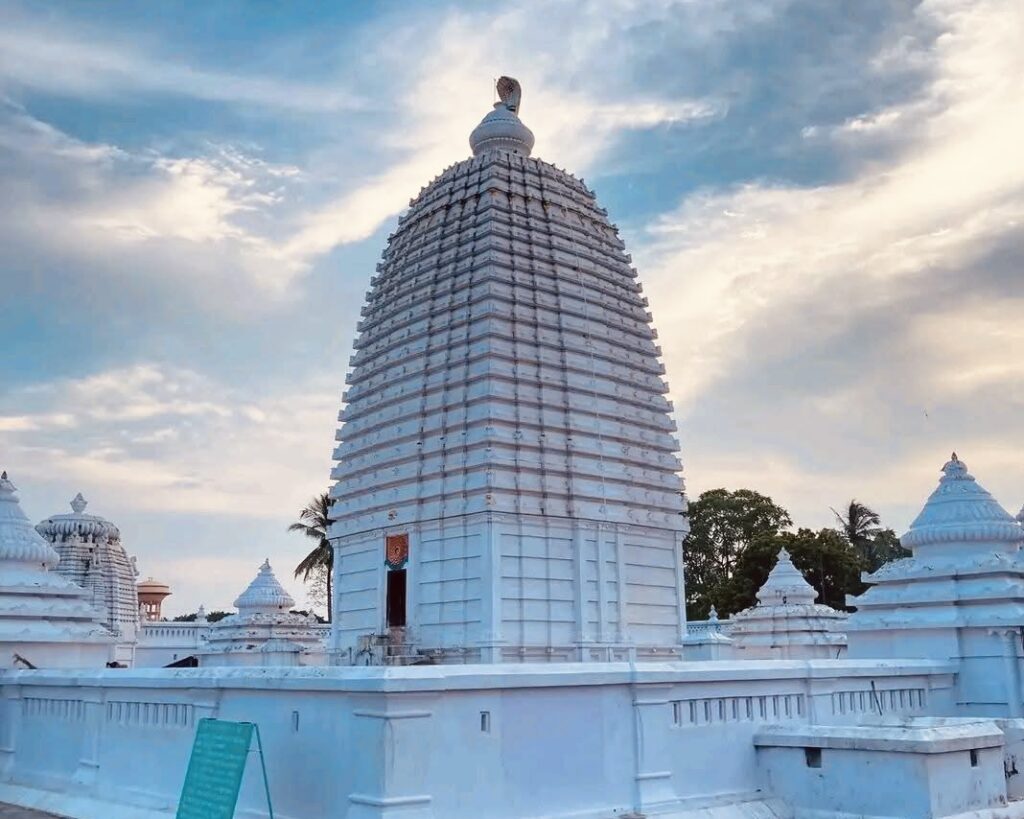
- Current Status: Today, the Khaliapali ashram is managed by the government’s endowment department, and a fair is held there annually. His samadhi temple remains a place of worship.
Source: Mahima Dharma Itihas


Very informative. Liked the content.
A wonderful read! I loved how clearly you explained the path of simplicity and truth in Mahima Dharma. The message of universal brotherhood and ‘happiness for all’ is so relevant today. Great job!
Thank you.
Very nice article, awesome and informative for all
Thank you.